“I Asked Myself If I’m Okay And We Both Started Laughing” Skeleton PNG
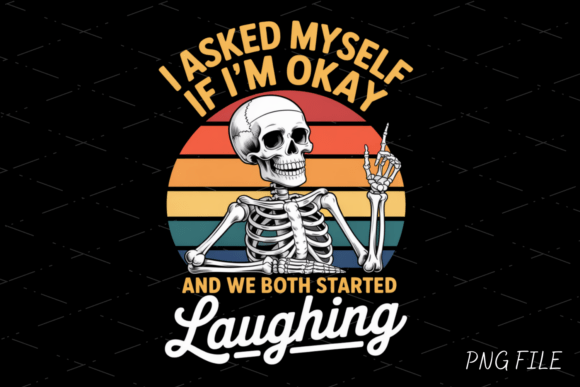
There’s a specific brand of humor that only lands when it’s wrapped in a bit of dark irony. It’s the kind of joke you share with a friend who just gets it—no lengthy explanations needed. That’s the energy captured in the “I Asked Myself If I’m Okay And We Both Started Laughing” Skeleton PNG. It’s more than just a graphic; it’s a mood. The design pairs a detailed, almost whimsical skeleton with a statement that hits uncomfortably close to home for anyone who’s ever managed their anxiety with a laugh. The vintage sunset stripes and bold, retro typography give it a throwback feel, like a faded band tee you’d find in a thrift store, but the message is thoroughly modern. It speaks directly to the overthinker, the introvert, and anyone who uses sarcasm as a coping mechanism. For designers and creators, this isn’t just another skeleton graphic; it’s a tool for connecting with an audience that values authenticity and relatable, unfiltered humor.
Visual Style and the Psychology of Relatability
What makes this particular premium design asset work so well? It’s the contrast. The skeleton itself is a classic symbol of mortality, often used in art to represent the fleeting nature of life. But here, it’s not macabre or scary. It’s a participant in the joke. The vintage aesthetic, with its warm, fading stripes, softens the edge of the dark humor, making it feel nostalgic rather than grim. The typography is strong and clear, a display font style that commands attention without sacrificing readability. This combination is key. In graphic design, the most memorable pieces often blend conflicting ideas: life and death, seriousness and silliness, retro and contemporary. This PNG does exactly that. It creates a visual hierarchy where the humorous text is the hero, supported by the skeleton graphic that adds personality and depth. For a brand identity that targets a younger, culturally aware demographic, using this kind of imagery signals that you understand their language. It’s a form of visual shorthand for “we don’t take ourselves too seriously, and neither should you.”
Strategic Applications for Creators and Businesses
So, you have this fantastic, high-contrast PNG with a transparent background. Where does it actually work? The applications are broader than you might think, and they extend far beyond just slapping it on a t-shirt, though that’s a great start.
- Apparel and Print-on-Demand: This is its natural habitat. The design is optimized for direct-to-garment (DTF) and sublimation printing. Think beyond standard tees. Imagine it on the back of a hoodie, the pocket area of a crewneck, or even as an all-over print pattern on leggings for a bold, statement piece. The clean layout ensures it translates well from screen to fabric without losing detail.
- Marketing and Social Media: For a brand in the mental wellness, comedy, or lifestyle space, this graphic is a social media goldmine. Use it as the centerpiece for an Instagram post or a TikTok video background. The relatable quote is highly shareable, driving engagement. It can also be incorporated into email marketing headers or blog post graphics to add personality and stop the scroll.
- Packaging and Merchandise: For small businesses selling candles, journals, coffee, or any product with a bit of an edge, this design can elevate your packaging. Print it on a sticker, a box sleeve, or a branded tote bag. It turns a simple purchase into an experience, giving your customer something to smile about and, more importantly, something to show off to their friends. This kind of thoughtful detail builds brand recognition and loyalty.
- Digital Products and Editorial Design: The PNG can be used in digital planners, as a decorative element in a Notion template, or within the layout of an online magazine or newsletter. It adds a touch of creative flair to otherwise functional digital spaces, making the user experience more enjoyable and memorable.
Making It Work: Practical Design Considerations
Integrating a strong, personality-driven asset like the “I Asked Myself If I’m Okay” Skeleton PNG into a project requires a bit of finesse. It’s not a neutral background element; it’s a statement piece. Here’s how to use it effectively.
First, consider your font pairing. The design already includes typography, so if you’re adding more text, choose a complementary, not competing, typeface. A clean, simple sans-serif font for body text or a minimalist serif font for a more editorial feel would work well. Avoid other ornate or highly stylized fonts that could create visual chaos. The goal is to let the skeleton design be the focal point.
Next, think about color. The vintage sunset palette is part of its charm. Pull one or two colors from the stripes to use as accents in your broader design. This creates cohesion. If you’re placing it on a dark background, the transparent background of the PNG is your best friend, allowing the colors to pop. On a light or white background, the design will feel more classic and bold.
Finally, context is everything. This design thrives in spaces where its humor is understood and appreciated. It’s perfect for a pop-up shop targeting college students, a podcast about millennial anxieties, or a small business run by someone who proudly identifies as an overthinker. It might be less suitable for a corporate law firm’s annual report, unless that firm has a very specific, self-aware brand voice. Always test how the design feels within your specific project’s environment. Does it enhance the message or distract from it? When used thoughtfully, this edgy skeleton artwork doesn’t just decorate; it communicates, connects, and makes your project instantly more human and relatable.